The Censorship Network: Regulation and Repression in Germany Today
At vero eos et accusamus
Lorem ipsum dolor sit amet, consectetur adipiscing elit, sed do eiusmod tempor incididunt ut labore et dolore magna aliqua. Ut enim ad minim veniam, quis nostrud exercitation ullamco laboris nisi ut aliquip ex ea commodo consequat. Duis aute irure dolor in reprehenderit in voluptate velit esse cillum dolore eu fugiat nulla pariatur. Excepteur sint occaecat cupidatat non proident, sunt in culpa qui officia deserunt mollit anim id est laborum.
A new initiative exploring the scope, scale and origins of the country’s digital content controls
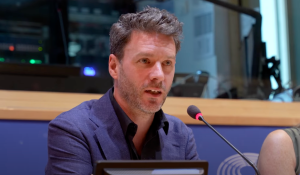
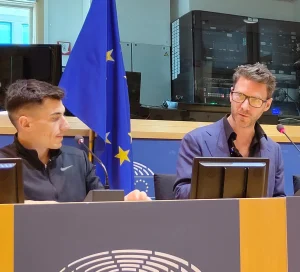
Last week at the European Parliament and then in Berlin, my non-profit, liber-net, launched The Censorship Network: Regulation and Repression in Germany Today. The culmination of more than half a year’s research, the project maps the key content controls, actors, policies, and trends in Germany.
Over the past several years, investigative reporting has uncovered a range of coordinated efforts to suppress online speech in Western countries. Often described as the Censorship-Industrial Complex, these networks of information suppression (mostly operating under the guise of countering “disinformation” or “hate speech”) have been particularly widespread in the United States, the United Kingdom, and the European Union. In the EU, Germany plays a central role in this system, with numerous governmental and private actors monitoring online speech and advocating for increasingly stringent content suppression.
Germany’s reputation as a hub of censorship has grown significantly in recent years. In early 2025, a US 60 Minutes investigation drew international attention for clips of dawn apartment raids by armed police on people who had posted offensive memes. In other clips, state prosecutors chuckled at the seizure of citizens’ devices and emphasised the seriousness of the offence of “insulting” a politician.
While many German academics and journalists have written about the growth of censorship in the country, no one has yet attempted to map the actors as a whole. With our background in mapping the US Censorship-Industrial Complex for Matt Taibbi, and in collaboration with a host of German specialists, researchers, and advisers, we set out to understand and map the country’s content controls field.
The result is:
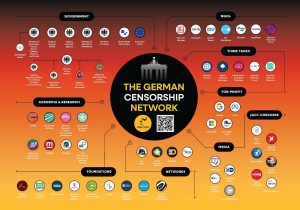
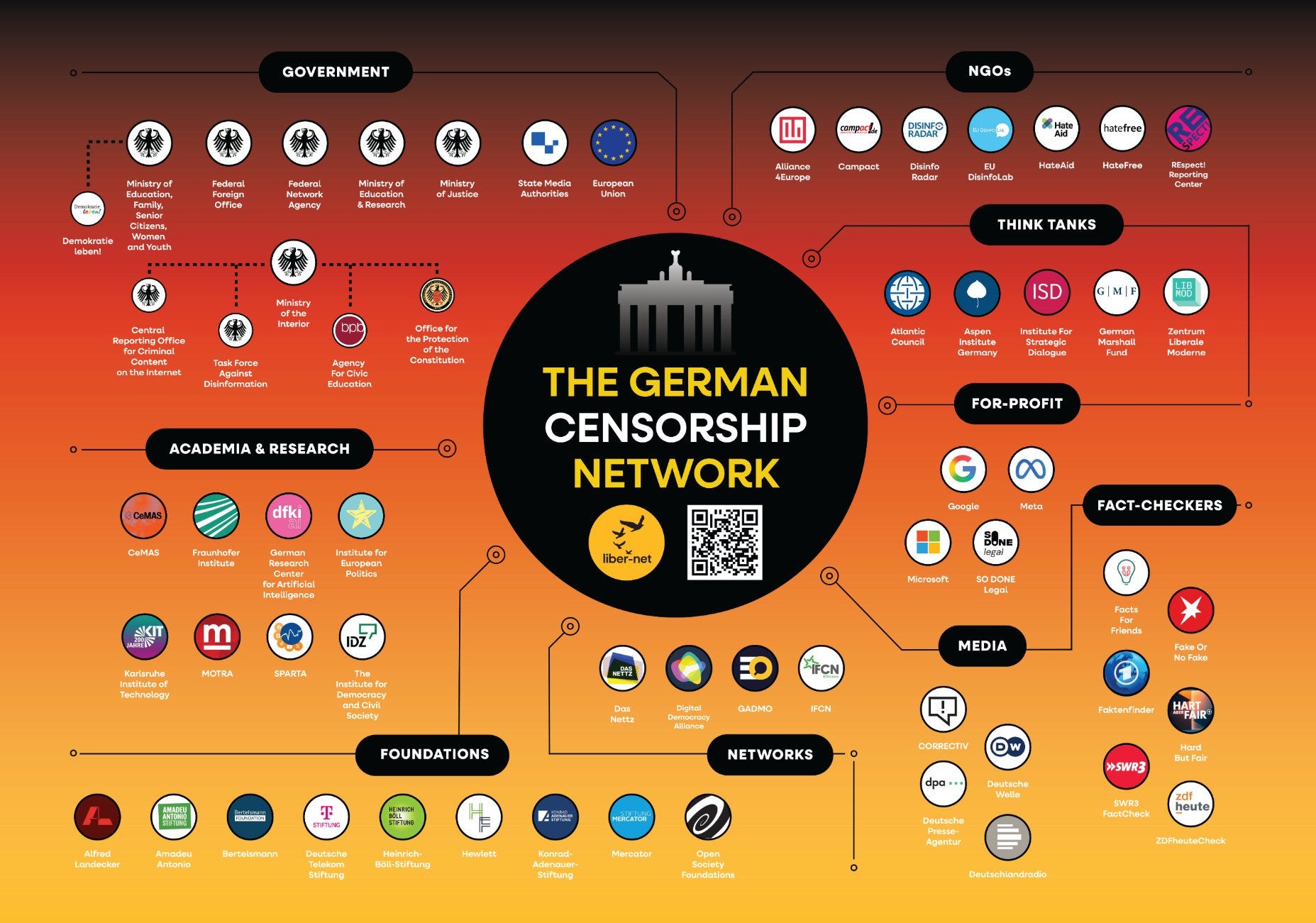
a map of the leading content control organisations in Germany
A 20,000-word report exploring the origins, politics, scope, and anticipated impact of German content controls.
An organisation’s database profiling almost 330 government agencies, NGOs, academic centers, think tanks, foundations, and networks
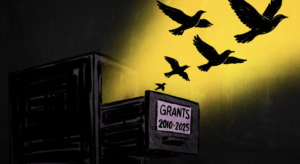
a grants database of more than 420 content controls, awards, and grants
a series of infographics that visualise the above data
All content is available in German and English.
The project has already gained significant attention with articles in Racket, UnHerd, Berliner Zeitung, and has been trending on X.
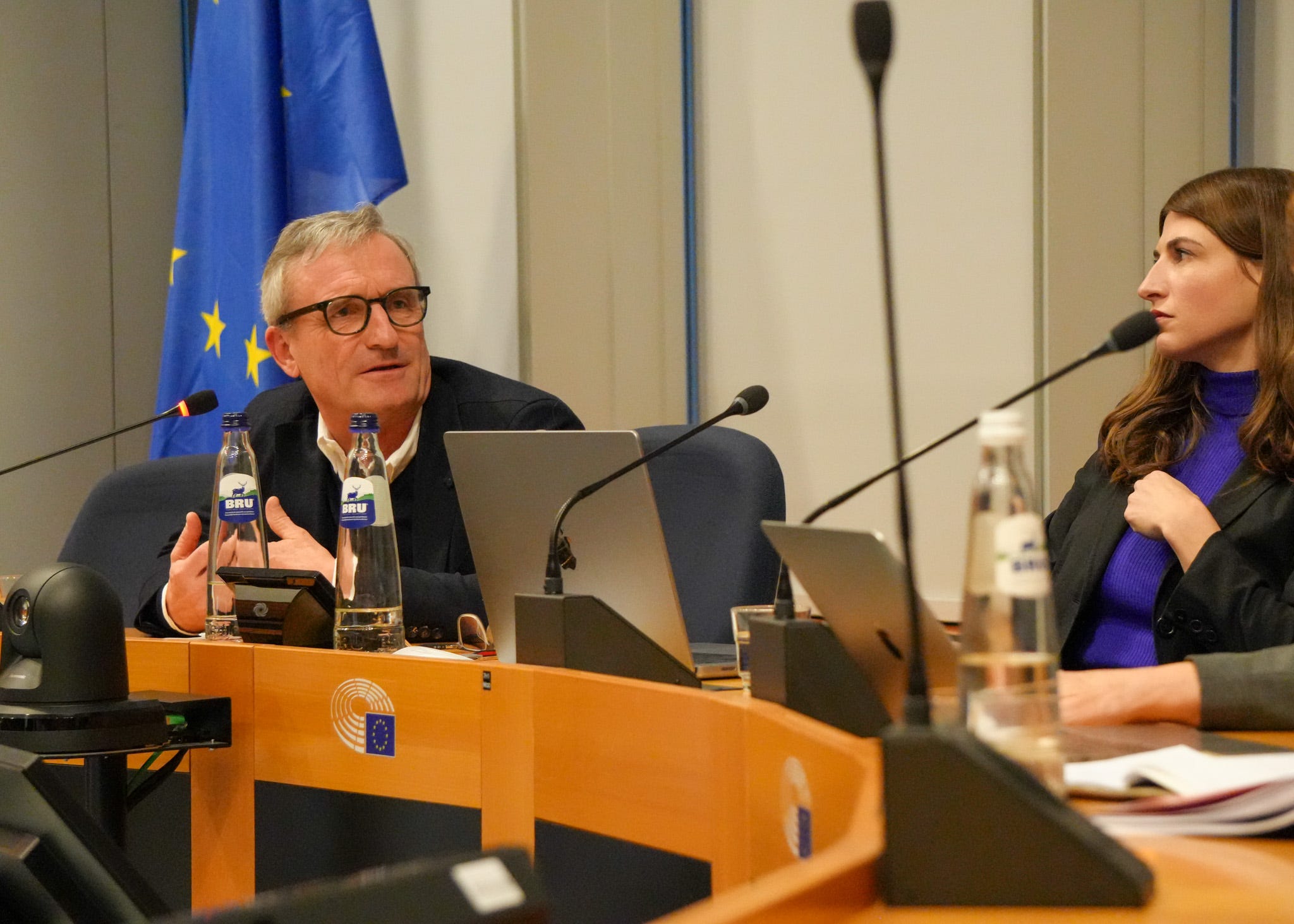
As mentioned earlier, the initiative was launched at the European Parliament courtesy of MEP Thomas Geisel, a former Socialist Party mayor of Düsseldorf who defected to the Sarah Wagenknecht Network, a new heterodox progressive party that maintains a commitment to free speech. Also speaking in Brussels was journalist Aya Velázquez, who broke the COVID-related RKI Files story (a major leak from Germany’s premier public health institution), and high-profile political scientist Ulrike Guérot, who has been heavily censored and smeared in recent years.
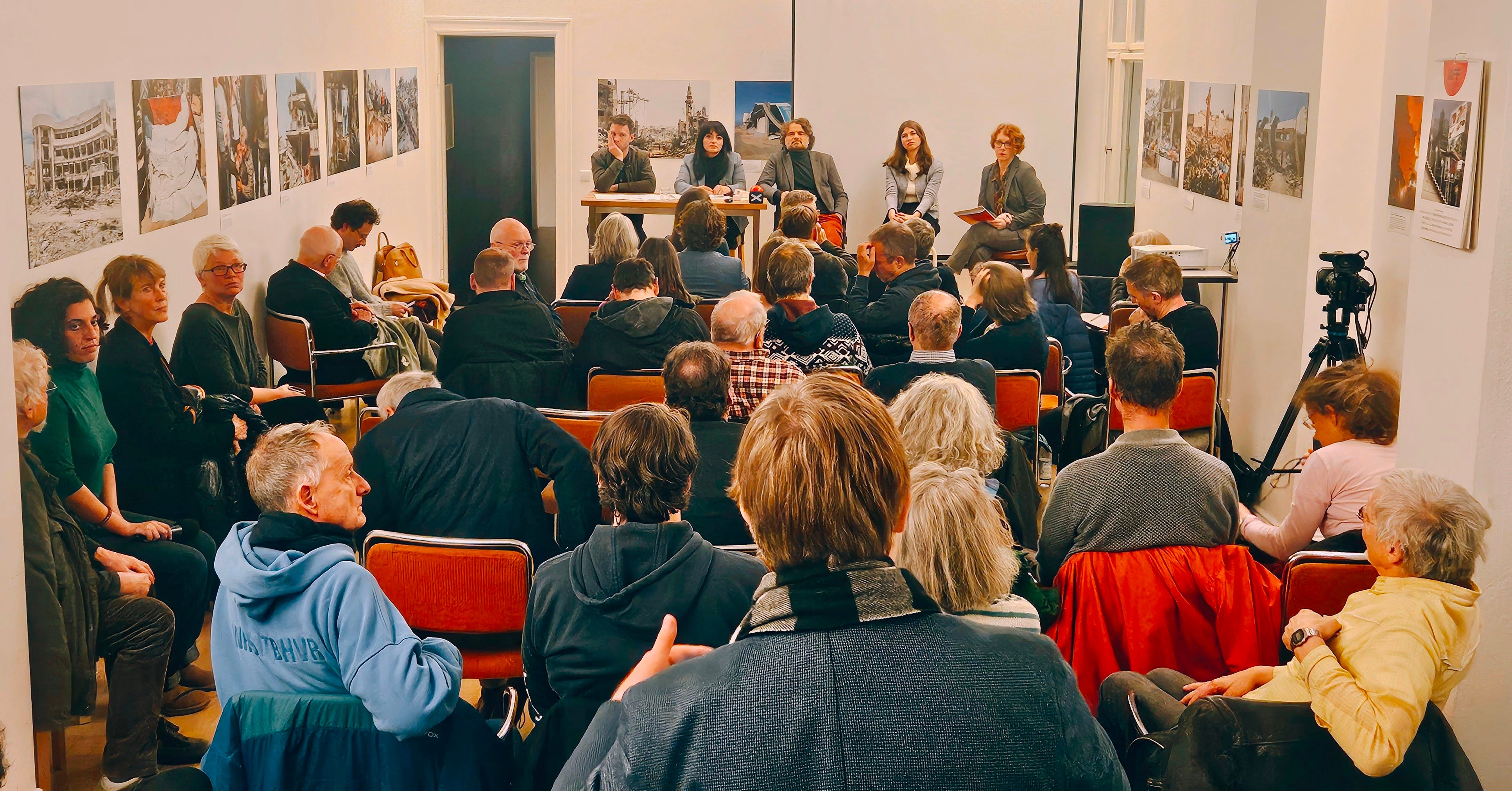
For the Berlin launch, Aya, Ulrike, and I were joined by former parliamentary member Sevim Dağdelen and journalist Florian Warweg. The discussion was lively, and after two and a half hours, hardly anyone among the 60 or so attendees had left.
I’ll send out a separate post detailing the findings of the report and, in particular, the infographics.
For now, enjoy browsing the initiative. Comments, questions, and improvements are most welcome.